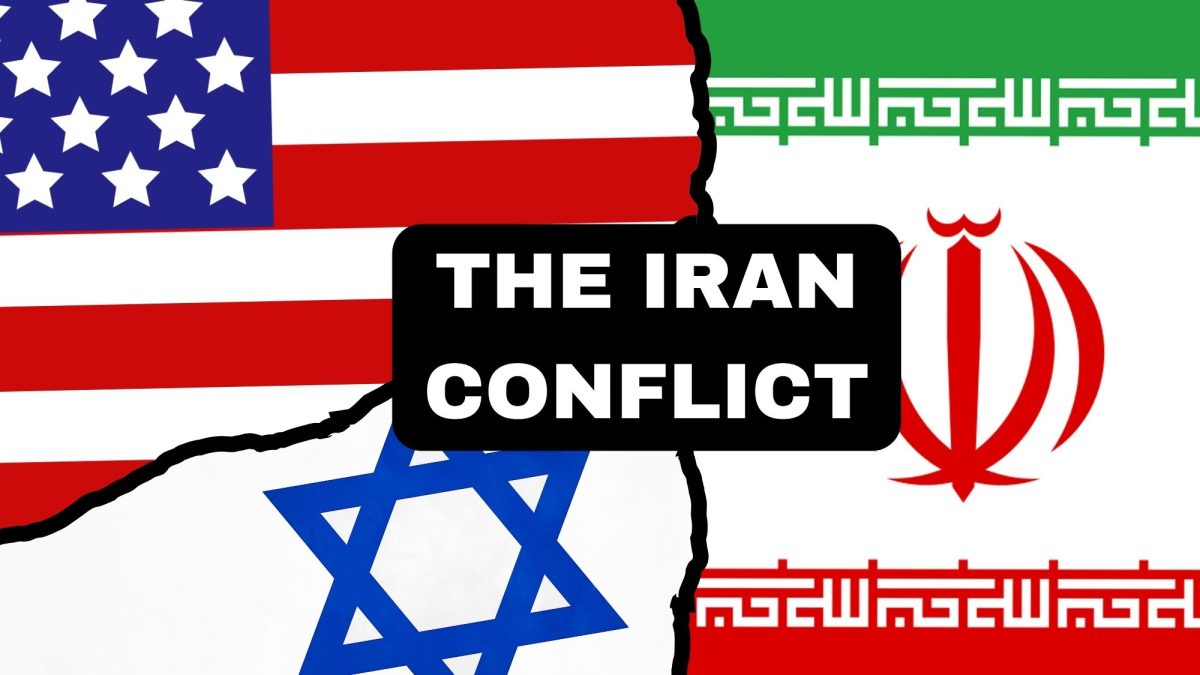
The collapse of the Geneva Peace Talks in late 2025 led to the long-standing tensions between the United States, Israel, and Iran, becoming a large-scale military conflict this Spring.
It is important to note that although the United States Congress has not officially declared war, many other international stakeholders refer to the conflict as a war.
For students at Rockville High School, the conflict is no longer just in the headlines but rather manifesting itself in economic shifts and a multitude of digital misinformation.
The current instabilities are primarily due to the collapse of the Geneva Peace Talks in late 2025. Following a breakdown in nuclear negotiations with Iran, the United States and Israel launched Operation Epic Fury on February 28, 2026. This operation targeted Iranian nuclear enrichment facilities and central command centers.
Operation Epic Fury resulted in the death of Iran’s supreme leader, Ali Khamenei, which created a “leadership vacuum” in Tehran. The shift in power in Iran has made it increasingly difficult to predict the regional landscape and the future of this conflict.
A big part of the dispute’s global impact is the Strait of Hormuz, a waterway through which around 20% of the world’s petroleum passes. In response to the conflict, the Iranian government implemented a partial blockade of the Strait.
The resulting scarcity of petroleum has led to a significant increase in gas prices and additional costs for global shipping.
Additionally, the US government has expanded its use of sanctions, or legal and financial restrictions designed to isolate the economy of an adversary, like Iran. These measures have directly heightened the costs of consumer electronics, manufacturing parts, and international travel.
In addition to the economic impact, there is a substantial human toll. It is important to differentiate between the Iranian government and the 85 million citizens residing in Iran.
UN estimates as of March 2026 indicate that infrastructure damage from Operation Epic Fury has affected millions, with significant civilian displacement in Isfahan and Tehran.
The crisis is also being experienced in a digital setting. AI-generated propaganda and deepfake combat footage have made it difficult to distinguish reality. Digital tools are often used by people, even civilians, to spread misinformation about the conflict. For accurate information, students are encouraged to look for reputable, nonpartisan news sources and official reports.
On April 8, 2026, a two-week ceasefire began. On April 22, President Donald Trump extended the ceasefire indefinitely. While peace talks were attempted, the future of the conflict remains uncertain.